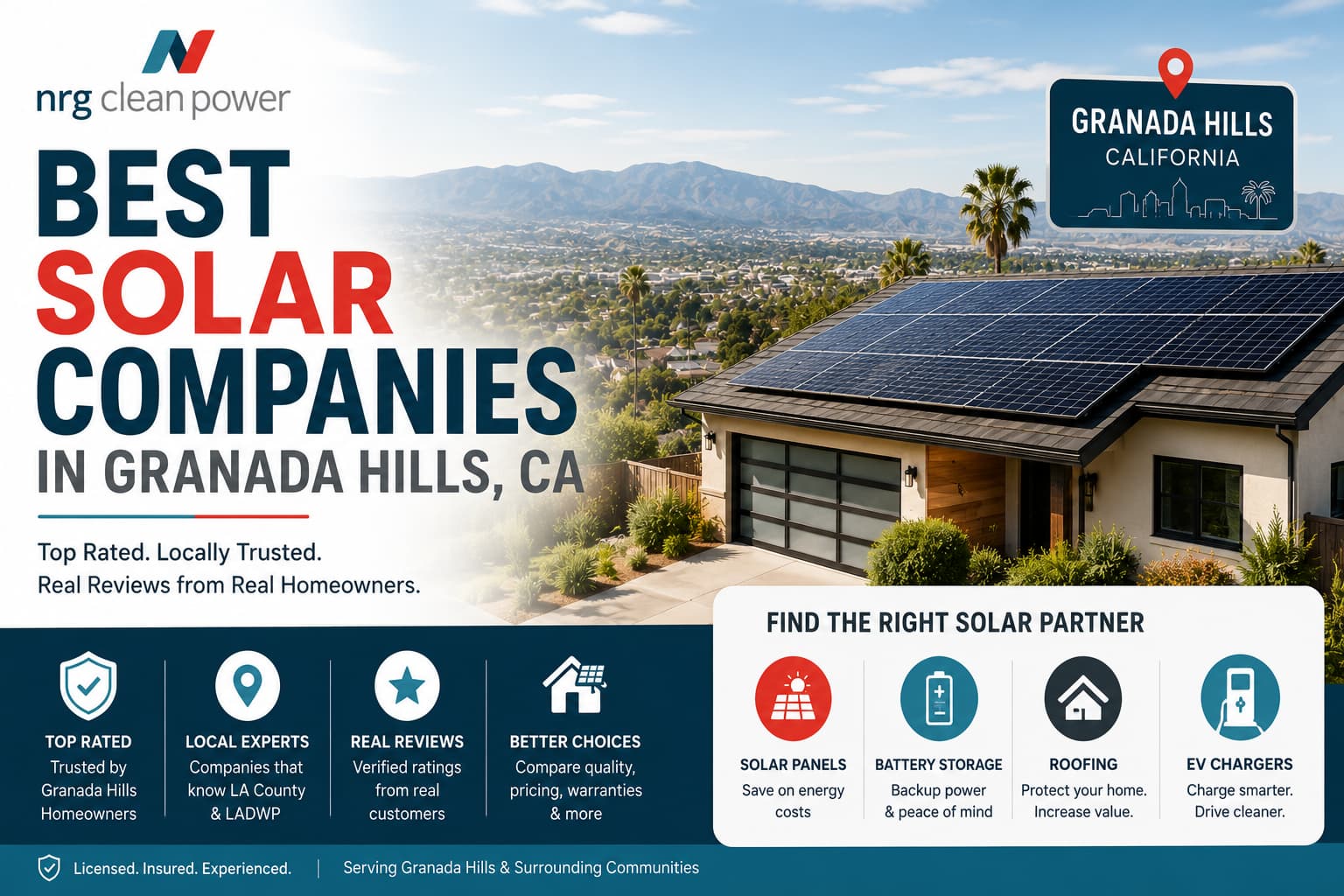
Best Solar Companies in Granada Hills, CA (2026 Edition): Top 10 Installers + Real Prices

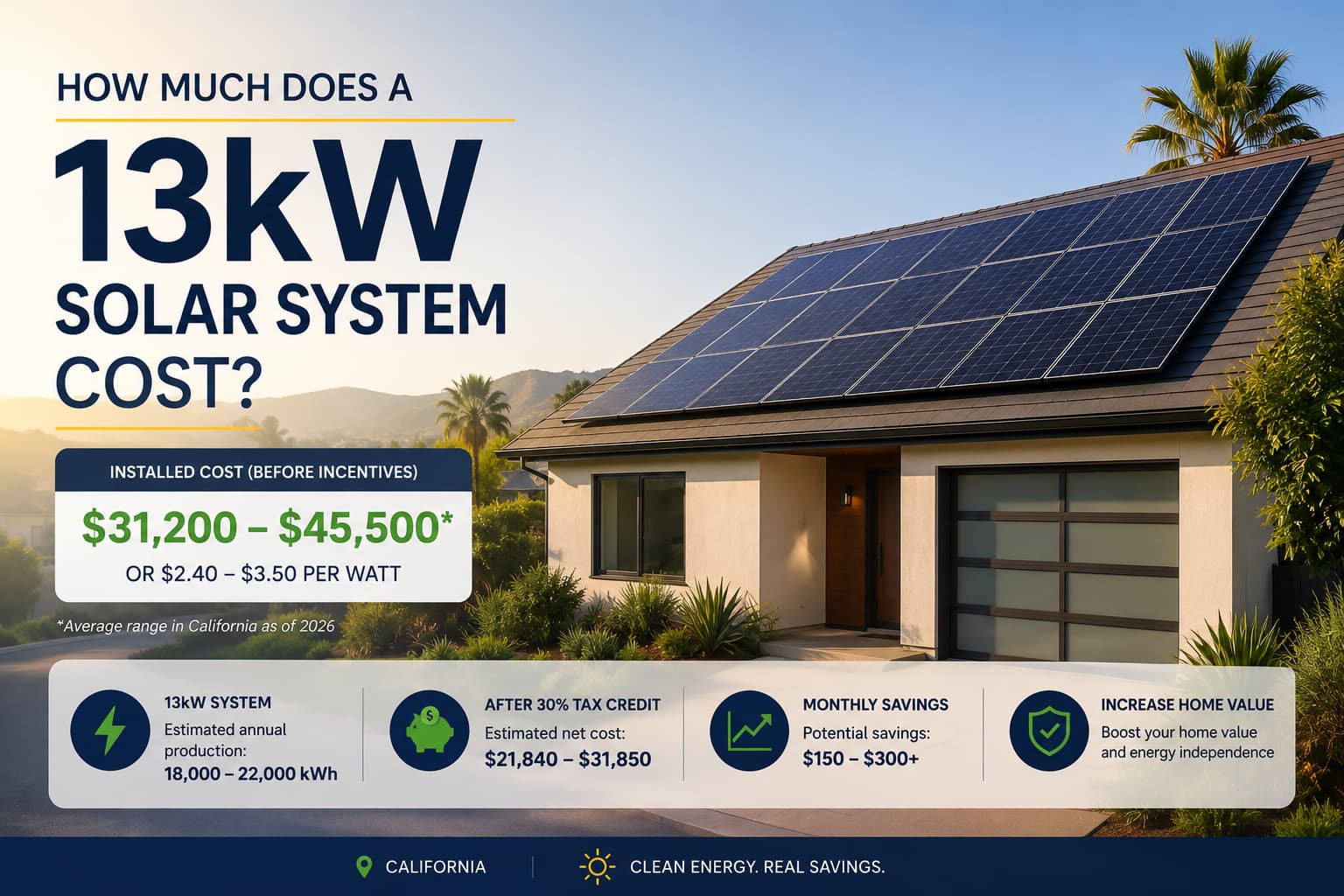
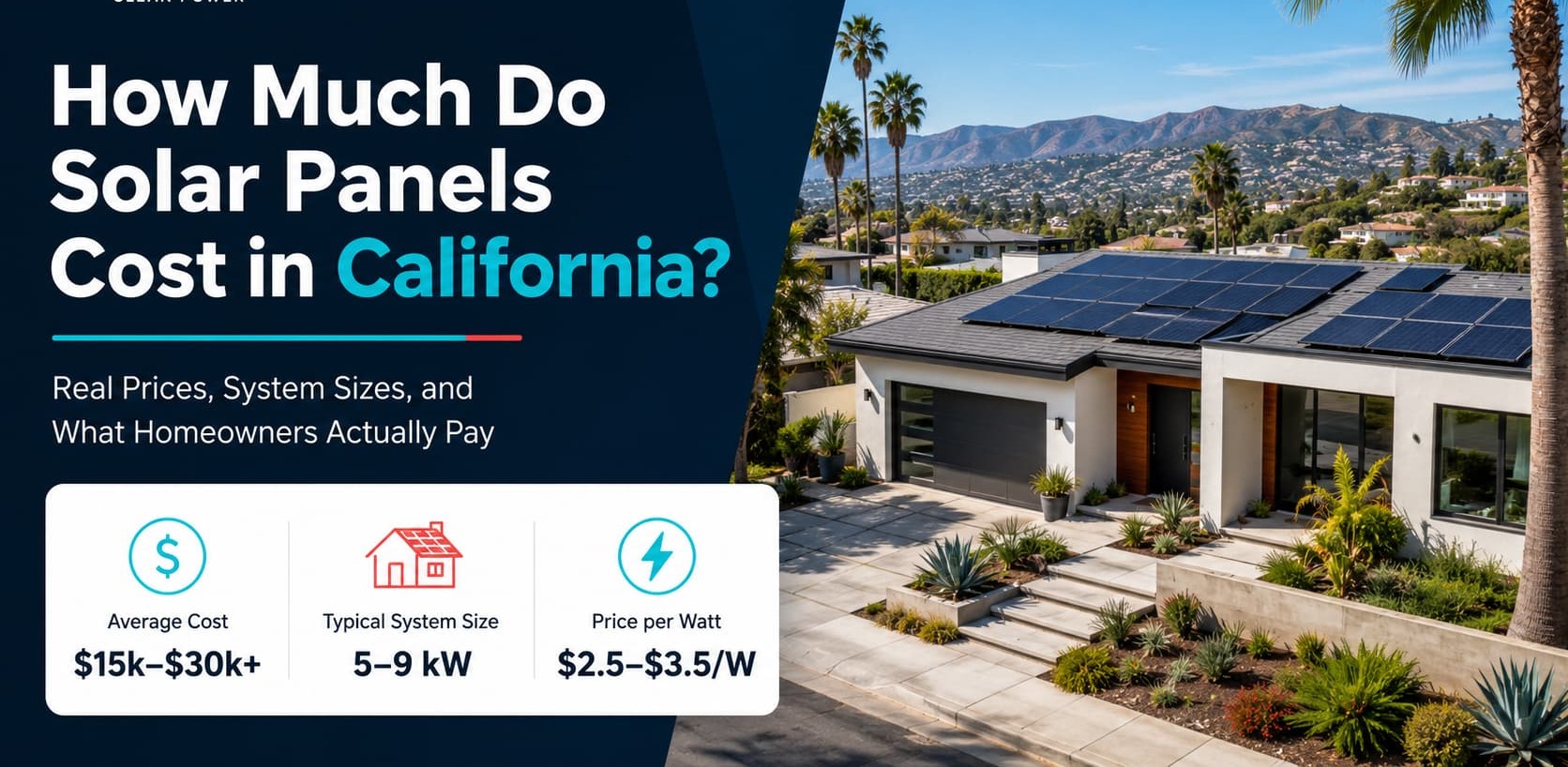
Quick answer: Granada Hills homeowners pay an average of about $2.30 per watt for solar, with the typical system in the neighborhood sized around 11.4 kW and costing roughly $26,000 before incentives, according to EnergySage marketplace quote data for Granada Hills. Because the neighborhood is LADWP territory with traditional retail net metering, payback here runs faster than almost anywhere in SCE country, often 5 to 7 years even without the expired federal tax credit. The best installers for this market combine LADWP interconnection experience with roofing competence, because much of the local housing stock is 1950s to 1970s construction that needs a roof evaluation before panels go up.
Key takeaways

  • Granada Hills is one of the best solar markets in Los Angeles, and most homeowners here do not realize why: LADWP still pays retail net metering credit while SCE neighbors are stuck on NEM 3.0
  • Local quote data puts average pricing at $2.30 per watt, below the LA-wide norm
  • The 30 percent federal tax credit for purchased systems expired December 31, 2025. Lease and PPA products can still capture the separate commercial credit through third-party ownership
  • Prioritize installers with documented LADWP interconnection experience and a roofing license or in-house roofing crew
  • Verify any contractor’s license status on the CSLB license lookup before signing anything

Why Granada Hills is not a normal LA solar market

Granada Hills looks like every other Valley suburb from the 118, and that is exactly why most solar companies treat it generically. They should not. Three things make this market different.

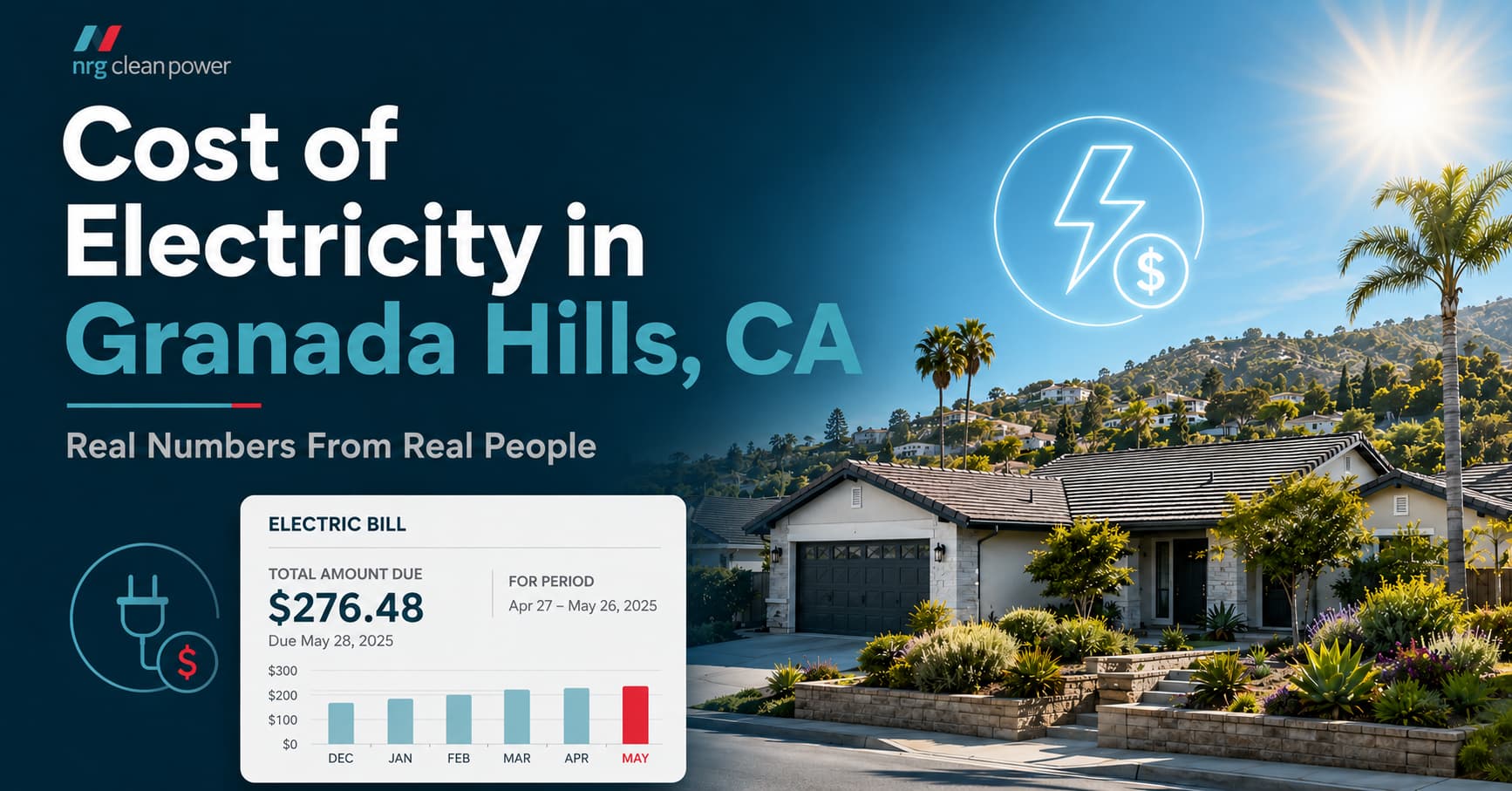
First, the utility. Granada Hills is City of Los Angeles, which means LADWP, which means the solar economics that apply to your coworkers in Santa Clarita or Simi Valley do not apply to you. LADWP never adopted NEM 3.0 and still credits exported solar at your retail rate schedule pricing. We broke down exactly what electricity costs here, tier by tier, in our guide to the cost of electricity in Granada Hills, and the short version is that every kWh your panels offset is worth 26 to 43 cents once you count the 10 percent city utility tax.

Second, the heat. Zone 2 Valley summers push AC-driven usage into LADWP’s Tier 3, which is when solar production is also at its peak. Production and savings line up almost perfectly here.

Third, the roofs. The flatland streets off Chatsworth Street and Balboa are full of mid-century composition shingle ranch homes, the same housing stock we covered next door in Chatsworth, while the newer gated communities near Rinaldi and the foothills by Knollwood and Bee Canyon run to concrete and clay tile. Tile installs and 50-year-old shingle roofs both punish inexperienced crews. The best installer for a Granada Hills home is one that can evaluate, and if needed replace, the roof under the array.

Market snapshot

FactorGranada Hills, 91344
UtilityLADWP (Zone 2), traditional retail net metering
Average quoted price~$2.30/W (EnergySage marketplace data)
Typical system size~11.4 kW
Typical pre-incentive cost~$26,000
PermittingLA Department of Building and Safety + LADWP interconnection
Federal incentive status25D expired 12/31/2025 for purchased systems; 48E via lease/PPA only

Sources: EnergySage Granada Hills marketplace data, March 2026; Congressional Research Service on the 25D expiration.

The top 10 at a glance

CompanyBaseTypeBest for
NRG Clean PowerSan Jose + LARegional CA, solar + battery + roofingTransparent pricing, LADWP experience, whole-project scope
AMECO Solar & RoofingValley Village + ParamountSoCal regional, solar + roofingOldest installer on this list, roof + solar in one contract
LA Solar GroupVan NuysSFV localValley-native installer, large local install base
Green ConvergenceSanta ClaritaSFV/SCV regionalSolar + roofing combos, SunPower systems
SunergyCA regionalRegionalHigh-volume value pricing
Green ConceptionSFVHyper-local91344-focused, roofing + solar
Imperial SolarSFVLocalReferral-driven local shop
AWS SolarSFVLocalHands-on smaller projects
Tesla EnergyNationalNationalPowerwall-first buyers
SunrunNationalNationalLease/PPA route to the 48E credit

License verification: confirm every contractor’s active C-46 or C-10 license and any disciplinary history on CSLB. NRG Clean Power operates under CA license #1026168; AMECO Solar & Roofing under #1053172.

The top 10, reviewed

1. NRG Clean Power

Yes, this is our list, so take the ranking with that in mind and check our reviews independently. Here is the case: we have been installing in California for over 30 years under license #1026168, we carry a best price guarantee with no hidden fees, and we run the entire Granada Hills project scope in-house, which matters in a neighborhood where the roof question comes up on most mid-century homes. Solar, battery storage, EV charging, roofing, and panel cleaning under one contract. We are a Tesla Certified Installer, an EnergySage Elite installer, and CNN Underscored’s Editors’ Pick, and our consultations are 100 percent virtual with no door-knocking, which is the sales model this article’s competitors mostly cannot say. LADWP interconnection is routine work for our LA team.

2. AMECO Solar & Roofing

The oldest company on this list by decades. AMECO has been installing solar in Southern California since 1974, holds CSLB license #1053172, and runs an office on Laurel Canyon in Valley Village, which puts its crews in the SFV every working day. The construction-first model is the draw: most employees are installers rather than salespeople, and roofing and solar live under one contract with Owens Corning Preferred Contractor status, which matters on Granada Hills’ aging mid-century shingle roofs. It is also Tesla Solar Roof certified for homeowners going that route. The company changed ownership in 2019, and some recent reviews cite slower post-signing communication than its legacy reputation suggests, so agree on a project timeline in writing.

3. LA Solar Group

A Van Nuys company with a large San Fernando Valley install base and its own racking and operations infrastructure. Being Valley-native means its crews see LADWP paperwork and Valley roof types every week. Reviews describe a company comfortable servicing systems years after installation, which is worth a lot in a market where some installers vanish. Mid-market pricing.

4. Green Convergence

Santa Clarita-based with more than 15 years in the SFV and Santa Clarita Valley, and one of the region’s established solar-plus-roofing specialists working with SunPower equipment. If your Granada Hills home needs a reroof under the array, a combined contract here is a legitimate option. As a SunPower dealer its equipment pricing trends higher, and much of its footprint is SCE territory, so confirm the crew’s LADWP experience for your specific project.

5. Sunergy

EnergySage’s 2026 California Installer of the Year, competing in the most crowded solar market in the country on volume and value pricing. A strong quote to have in your stack for price discovery. As a fast-scaling regional player, ask pointed questions about which crew actually performs your install and who services warranty claims.

6. Green Conception

A San Fernando Valley solar and roofing outfit that has planted its flag specifically on the 91344 ZIP code, with service pages covering Granada Hills, Porter Ranch, North Hills, and Chatsworth. Hyper-local focus and roofing scope are genuine advantages on this housing stock. It is a smaller shop with a thinner public track record than the companies above it on this list, so ask for local references and verify the license.

7. Imperial Solar

A Valley shop that grows on word of mouth; it turns up repeatedly in neighbor recommendations and Yelp reviews across the SFV. Smaller-company economics can mean sharp pricing and the owner on your roof. The tradeoff is limited bandwidth and less formal project management, so pin down timelines in writing.

8. AWS Solar

Another SFV local that reviewers consistently describe as knowledgeable and straightforward in the sales process. Good fit for homeowners who want a smaller company and a technical conversation rather than a pitch. Same due diligence applies: license check, insurance certificates, and a written production estimate.

9. Tesla Energy

The route to buy if your project starts with a Powerwall and ends with panels, not the other way around. Tesla’s hardware pricing is aggressive and the Powerwall 3 is an excellent product, but the installation experience is famously hands-off, LADWP paperwork included, and service response is the most common complaint. We compared its flagship battery against the main alternative in our Powerwall 3 vs Enphase IQ 10C breakdown.

10. Sunrun

The largest residential solar company in the country, and in 2026 its lease and PPA products carry a specific advantage: third-party-owned systems can still capture the 48E federal credit that purchased systems lost when 25D expired. If your tax situation or cash position rules out buying, a Sunrun-style TPO deal is how the federal incentive still reaches you. Read the escalator clause carefully; a 2.9 percent annual payment escalator compounds painfully over 25 years, and you will not own the asset.

Real prices in Granada Hills, 2026 rules

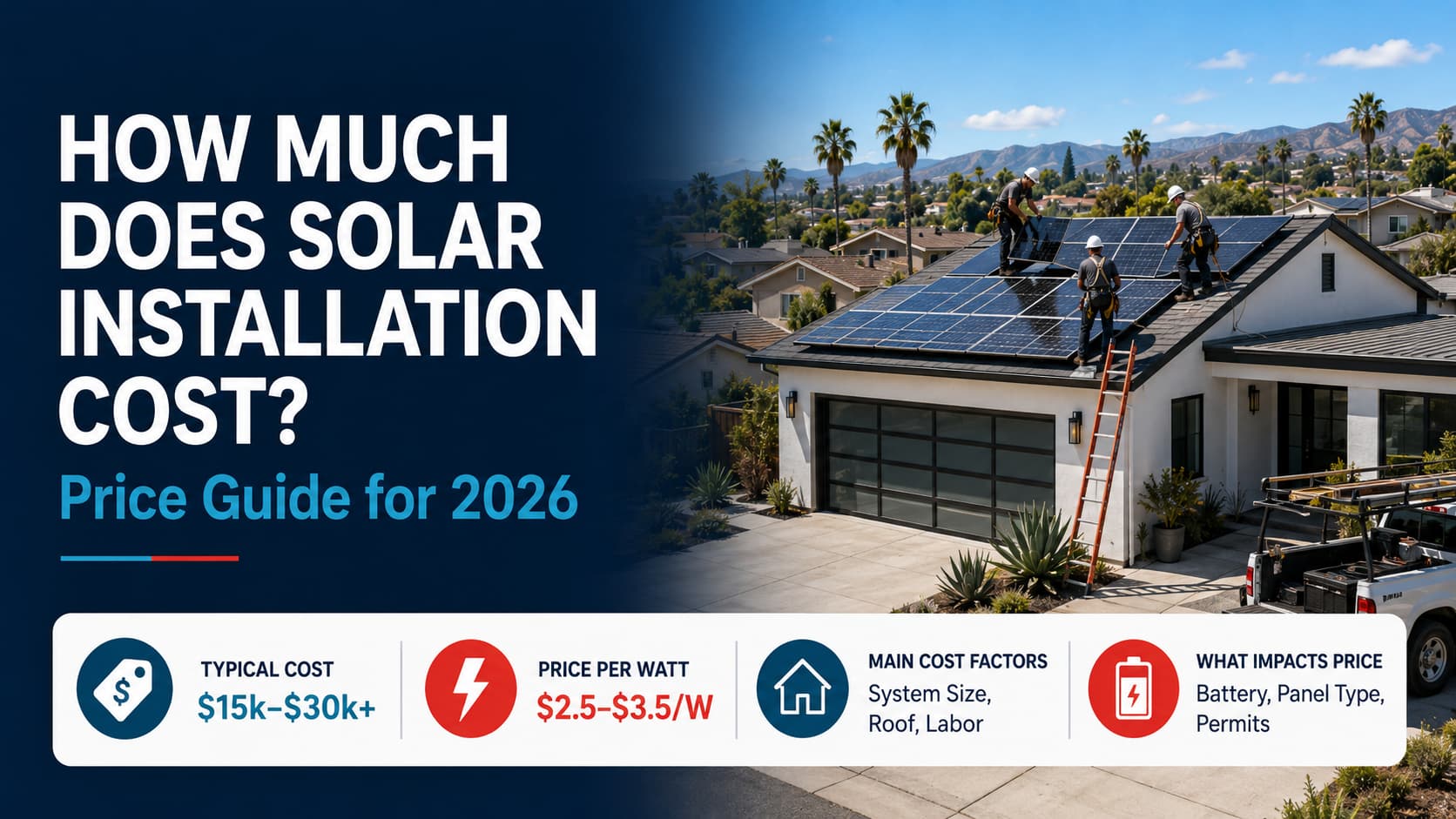
Direct answer: expect $2.10 to $2.60 per watt for a quality purchased installation in Granada Hills, with no federal credit applied, and lease/PPA offers that look cheaper monthly but cost more over the contract life.

ScenarioSystemTypical cash/loan priceFirst-year savingsSimple payback
Modest usage offset6 kW$13,500 to $15,500~$2,600~5.5 to 6 years
Typical Granada Hills home8 kW$17,500 to $21,000~$3,450~5.5 to 6 years
Full offset for the local average11.4 kW~$26,000~$4,900~5.5 years
Full offset + backup10 kW + battery$36,000 to $42,000~$4,400 + outage protection~8.5 to 9 years

Assumptions: $2.30/W market average per EnergySage Granada Hills quote data; savings valued at a blended 27 cents per kWh under LADWP retail net metering including the 10 percent city tax on offset kWh; no federal credit on purchased systems per current law. Full rate math is in our Granada Hills electricity cost guide.

Notice what is missing from that table: the battery is optional. Under NEM 3.0 an SCE homeowner practically needs storage to make the math work. Under LADWP retail net metering, the grid is your battery, and storage is a backup and peak-shaving decision, not a financial prerequisite. Our home battery guide covers when it still makes sense, mainly PSPS wind events and outage protection in the foothill streets.

How to choose an installer in Granada Hills

Direct answer: filter on four things in this order: active CSLB license with no recent discipline, documented LADWP interconnection experience, roofing capability or a roof evaluation in the proposal, and a production estimate specific to your roof orientation rather than a generic 1,600 kWh per kW assumption.

If you are comparing installers across a wider area than one neighborhood, our statewide ranking of the best solar companies in California covers how the big regional and national players stack up beyond the Valley.

Ask every bidder these questions. Who pulls the LA Department of Building and Safety permit, and how many LADWP interconnections did you complete in the last 12 months? Is my roof warrantied against penetrations, by whom, and for how long? What is the production guarantee, and what happens if the system underperforms it? Is the crew in-house or subcontracted? And on any lease or PPA: what is the escalator, what is the buyout schedule, and what happens when I sell the house?

One Granada Hills-specific note: if your home is in the hills near O’Melveny Park or Bee Canyon, you are in wind and fire-adjacent territory. Confirm the racking spec is engineered for Santa Ana wind loads and ask how the design handles Fire Department setback requirements on the roof plan.

FAQ

How much do solar panels cost in Granada Hills? About $2.30 per watt on average per EnergySage quote data, so roughly $18,400 for an 8 kW system and $26,000 for the 11.4 kW system that fully offsets the average local home. There is no federal tax credit on purchased systems in 2026, which most older articles still get wrong.

Is solar worth it in Granada Hills without the federal tax credit? Yes, and more so than in most of Southern California. LADWP’s retail net metering plus Tier 3 summer rates of roughly 39 to 40 cents per kWh (before the 10 percent city tax) produce simple paybacks around 5.5 to 6 years on a purchased system, against a 25-year equipment warranty.

Does Granada Hills have NEM 3.0? No. NEM 3.0 applies to CPUC-regulated utilities like SCE and PG&E. Granada Hills is LADWP, a municipal utility with its own net metering that credits exports at retail rate schedule pricing. Details and current rates are in our electricity cost guide for Granada Hills.

How long does solar permitting take in Granada Hills? Plan on a few days to a couple of weeks for the LA Department of Building and Safety permit when plans are clean, then LADWP interconnection review after installation before permission to operate. Installer experience with LADWP paperwork is the single biggest variable in total project time.

How does Granada Hills compare to nearby cities for solar? Better than most, because of the utility line. Neighbors in Santa Clarita, Simi Valley, and Calabasas are on SCE under NEM 3.0, which pays a fraction of retail for exported solar and effectively requires a battery. Granada Hills and neighboring Chatsworth split between LADWP and SCE service, so two homes a mile apart can have completely different solar math. Check your bill header before you compare quotes with a neighbor. Our statewide installer guide covers both worlds.

Should I get a battery with solar in Granada Hills? Financially optional, unlike SCE territory. Get one if outage protection matters to you, especially in the foothill streets exposed to PSPS wind events, or if you want to shave High Peak usage on the TOU plan. Skip it if your goal is pure bill offset on a budget.