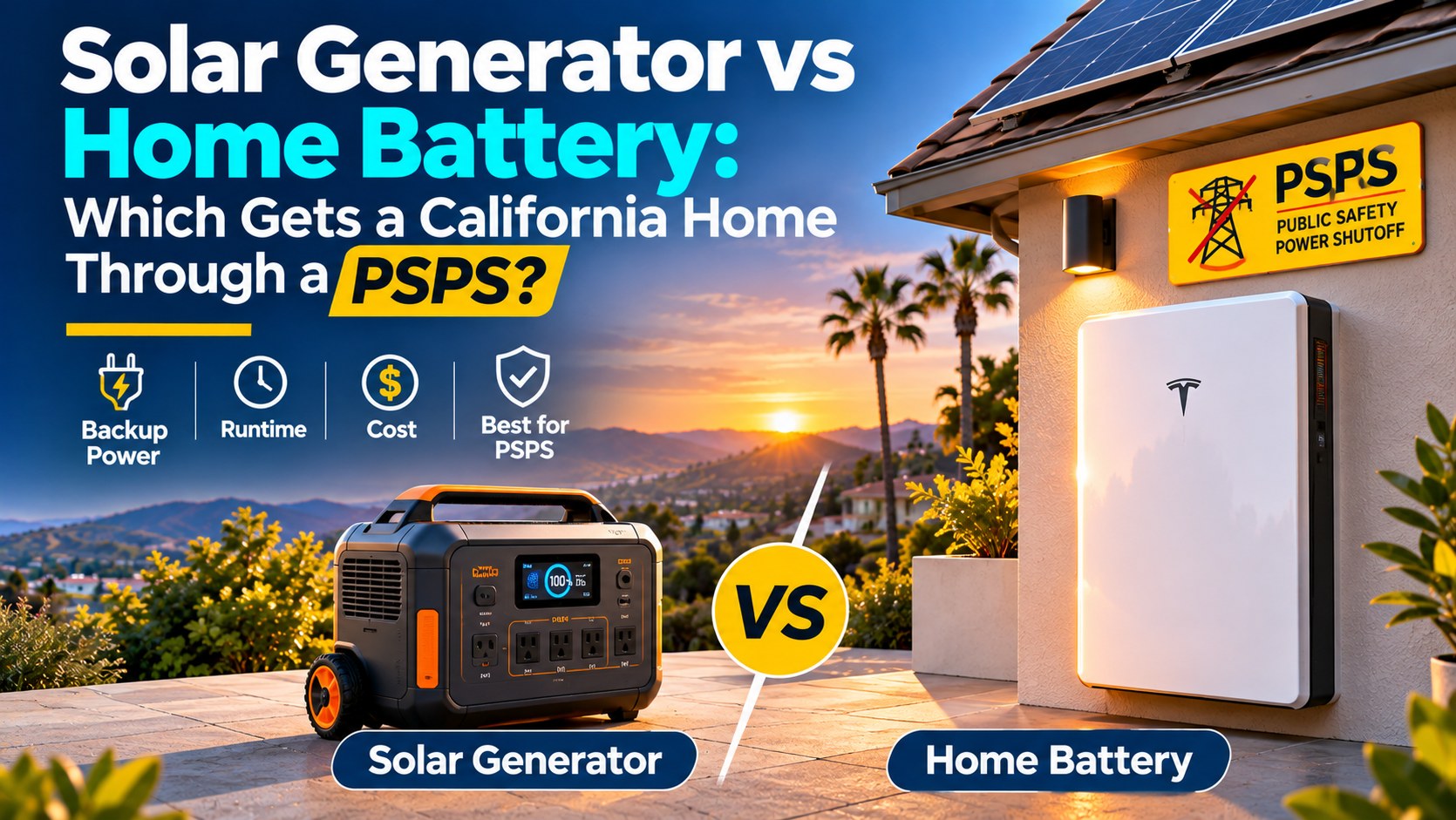
Solar Generator vs Home Battery: Which Gets a California Home Through a PSPS?
Portable solar generator or installed home battery? Real runtimes, 2026 prices and PSPS math for California homes, comparing EcoFlow, Anker SOLIX and Powerwall 3.


Portable solar generator or installed home battery? Real runtimes, 2026 prices and PSPS math for California homes, comparing EcoFlow, Anker SOLIX and Powerwall 3.

Solar system not producing? The most common California solar repairs, what each costs in 2026, which warranty pays, and how to keep your NEM 2.0 rate.

Do solar panels need cleaning in California? What dirt really costs you, when cleaning pays, how to clean without voiding your warranty, and 2026 prices.

Every California electric bill program in one place: CARE, FERA, Medical Baseline, AMP debt forgiveness up to $8,000, LIHEAP, PG&E REACH, and 2026 income limits.

When are peak hours in California? 2026 peak, off-peak and super off-peak times and prices for PG&E, SCE, SDG&E, LADWP and SMUD, plus what shifting saves.

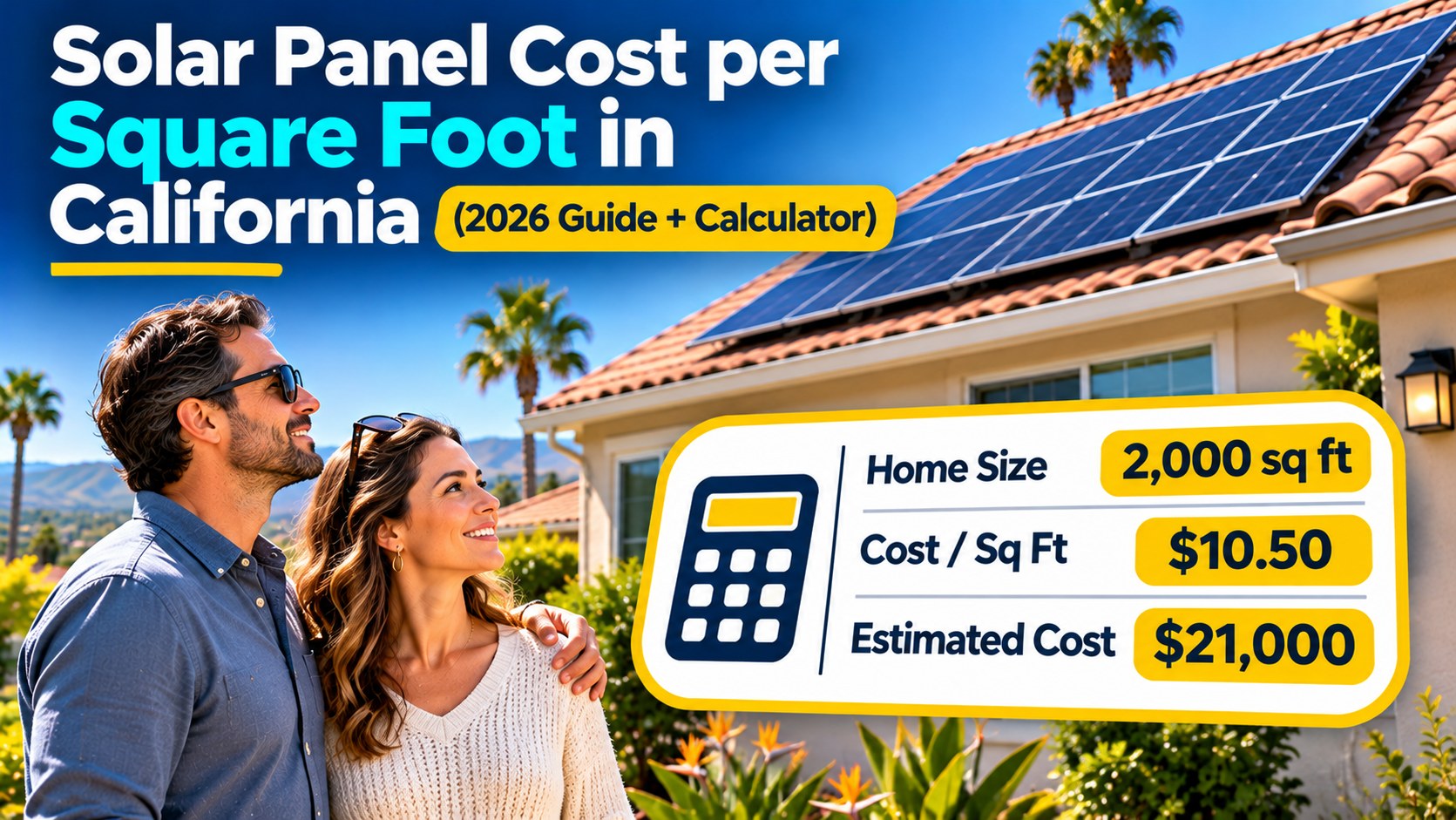
Last updated: November 18, 2026 Quick answer: Solar costs about $8.40 to $12.20 per square foot of living space in California in 2026, before incentives.

Quick answer: No, you can no longer buy a Tesla Solar Roof. Tesla stopped taking orders on August 20, 2026. Existing systems keep their 25-year

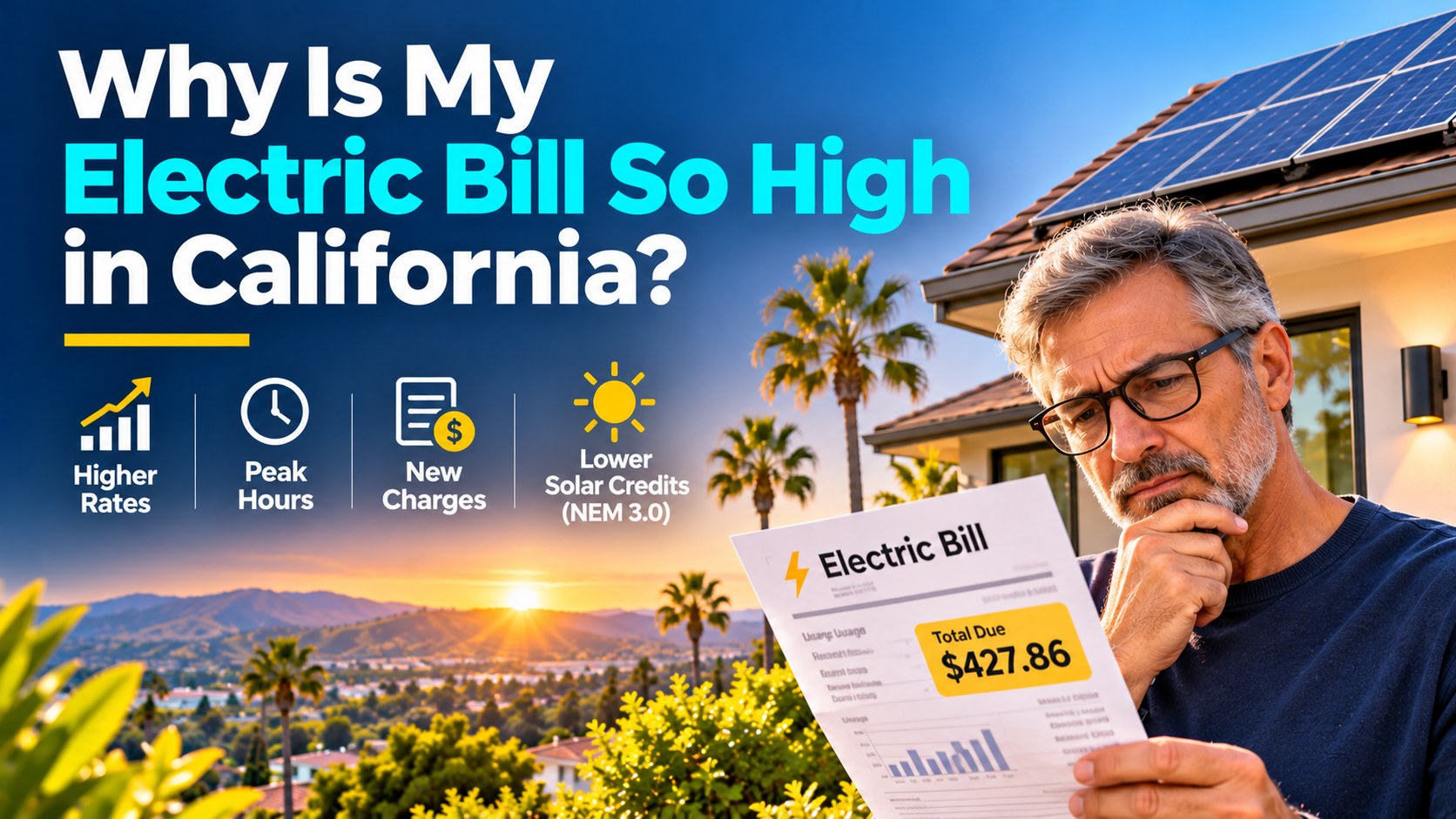
Your California electric bill jumped? The real reasons in 2026: PG&E, SCE and SDG&E rates, the $24 Base Services Charge, the moved Climate Credit, and fixes that work.

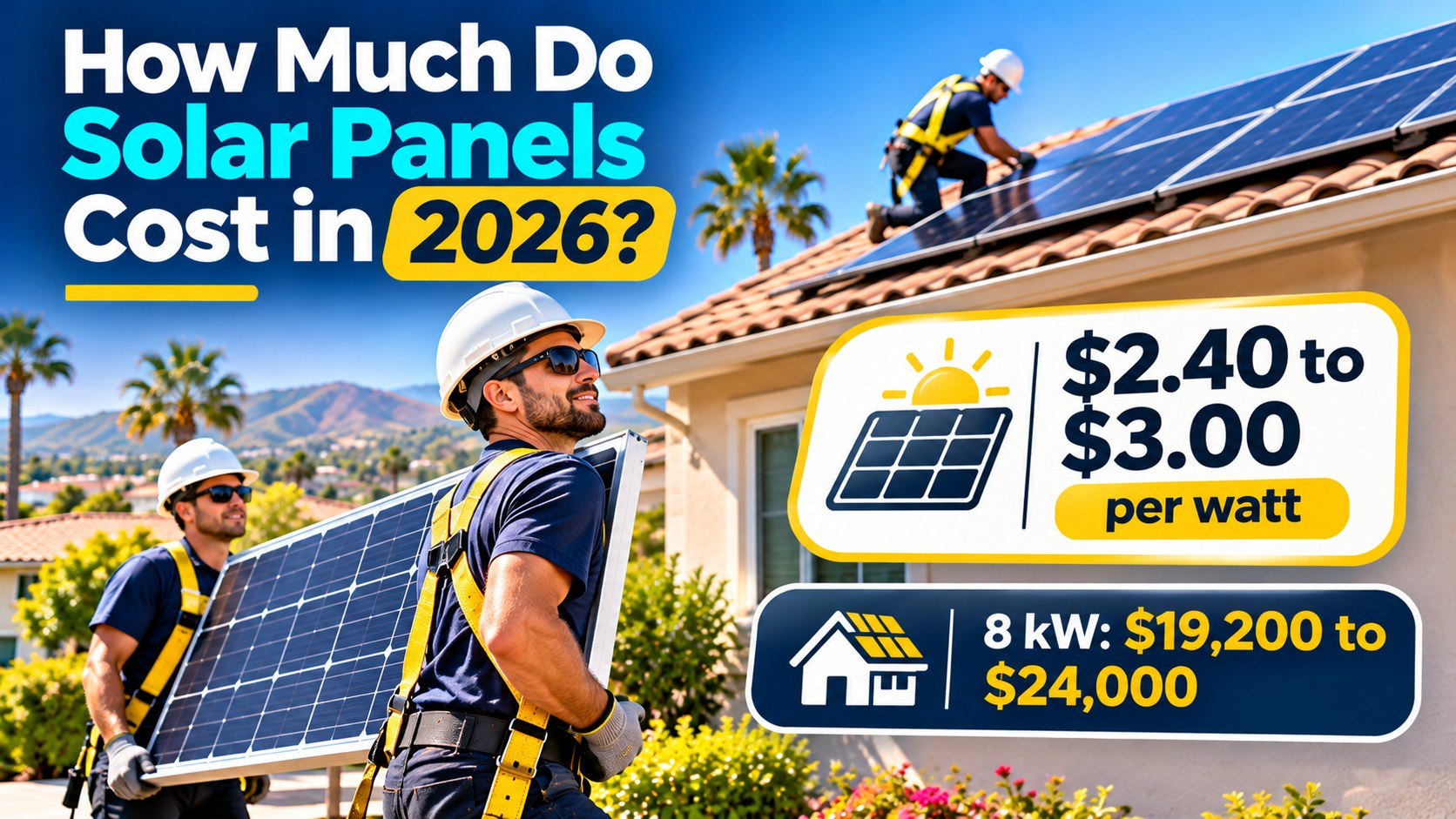
Last updated: November 18, 2026 Quick answer: Solar panels cost about $2.40 to $3.00 per watt installed in 2026, before incentives. That is about $19,200

Quick answer: Solar inverter repair in California costs about $250 to $1,500 in labor if the inverter is still under warranty, because the manufacturer ships

TL;DR: A California virtual power plant pays you to let the grid draw on your home battery during peak evenings. As of November 2026, one

TL;DR: PG&E peak hours are 4 to 9 p.m. every day on E-TOU-C, EV2-A and E-ELEC, and 5 to 8 p.m. on weekdays only on

Quick answer: An electrical panel upgrade in California costs a median of $3,500 for a panel swap (typical range $2,100 to $5,000), per Lawrence Berkeley

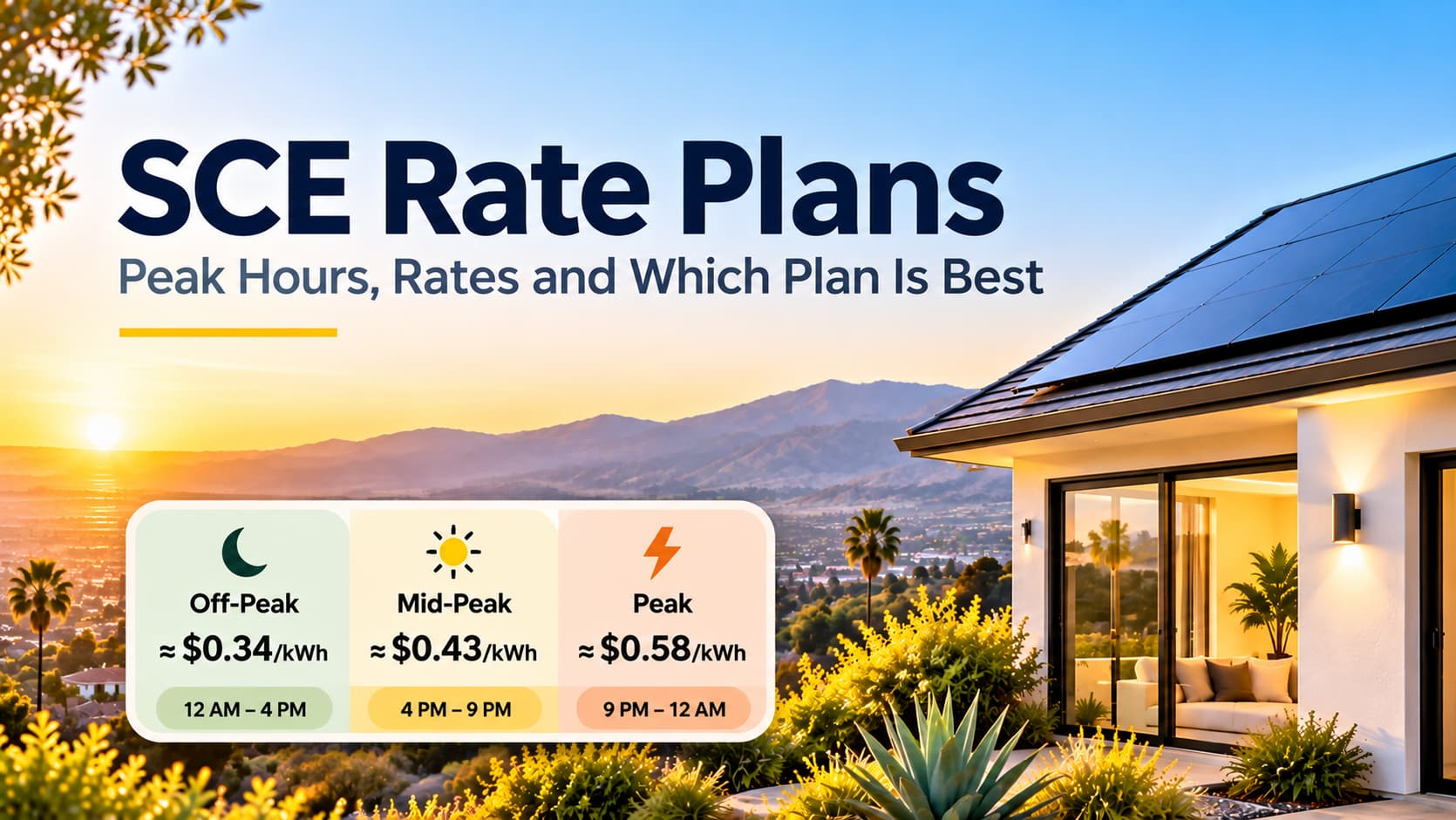
Quick answer: Southern California Edison has 3 main residential time-of-use plans in 2026. TOU-D-4-9PM (the default) peaks 4 to 9 p.m. at 59 cents per

TL;DR: Yes, solar panels work without a battery in California, but NEM 3.0 changed the math. In 2026 SCE credits midday exports at about 6

Quick answer: PG&E’s most common plan, E-TOU-C, costs 39.9 cents per kWh off-peak and 52.2 cents at the 4 p.m. to 9 p.m. peak in

TL;DR: Freedom Forever is being liquidated, not reorganized. Its bankruptcy case (No. 26-10522, District of Delaware) converted from Chapter 11 to Chapter 7 on August

If your California solar installer went out of business, your equipment warranties usually survive but your workmanship warranty does not. You still owe the loan.

TL;DR: Plug-in solar becomes legal in California on January 1, 2027, under SB 868. You can run up to 1,200 W of certified panels per

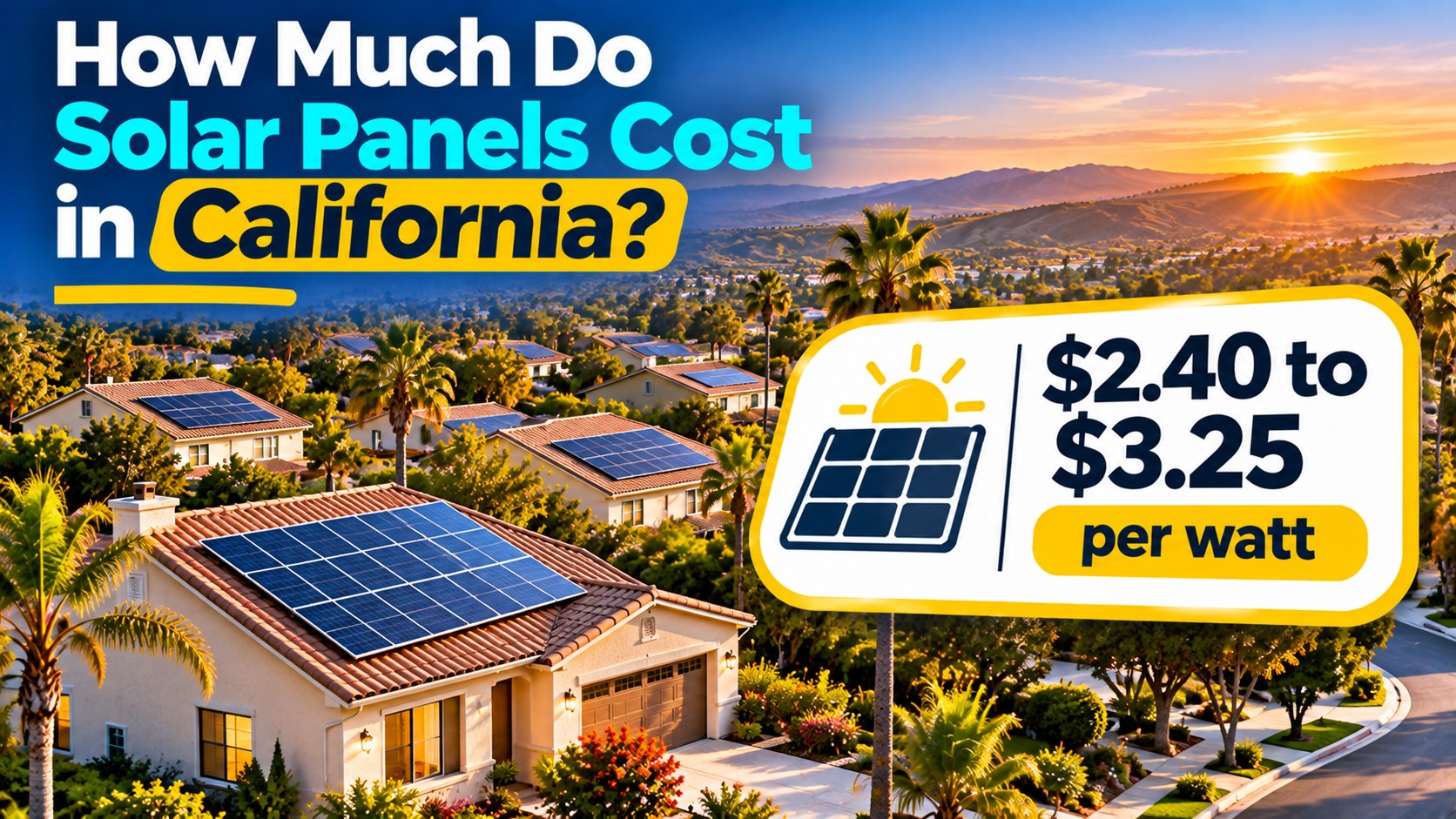
Last updated: November 18, 2026 Quick answer: The average cost of solar panels in California is about $2.40 to $3.25 per watt installed in November

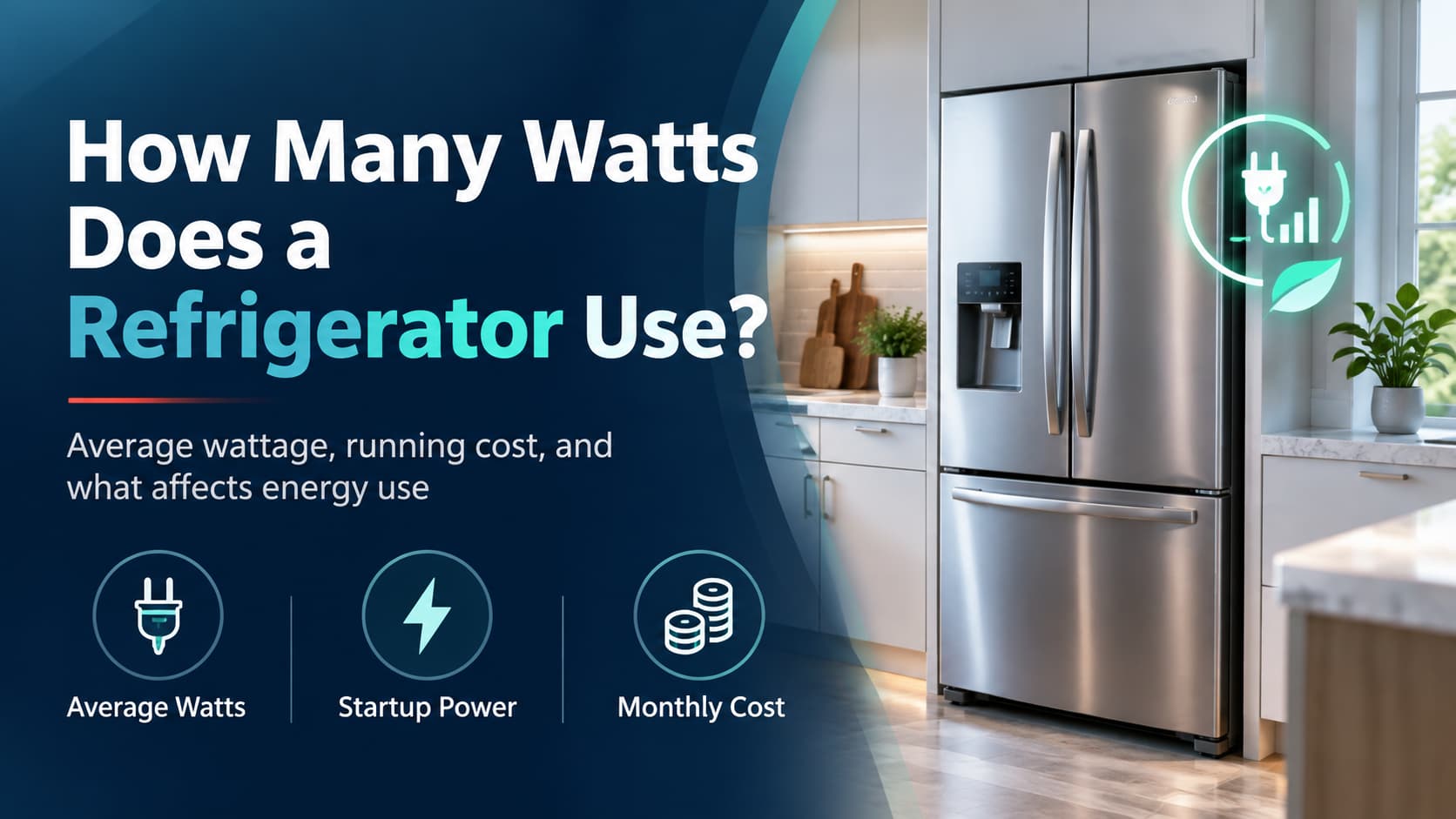
Quick answer: A modern full-size refrigerator draws about 100 to 250 watts while the compressor runs, about 1 to 2 amps at 120 volts, and

Quick answer: Household solar panels still pay off for most California homeowners in 2026, just more slowly than before. A typical 6 to 8 kW

Quick answer: The average California home pays $160.86 a month for electricity, compared with $142.26 for the average US home, according to the EIA’s 2024

TL;DR: A prepaid solar lease in California lets you pay once, up front, for a system a third party owns for about 5 to 6

Quick answer: The best solar companies in Simi Valley, CA in 2026 are NRG Clean Power, Ameco Solar, Shelter Roofing & Solar, Next Door Home

One installed battery costs $13K to $19K in California; whole-home backup runs $23K to $44K. Sizing, SGIP status, PSPS tips and battery-only options.

Quick answer: The average U.S. home uses about 863 to 899 kWh of electricity per month (EIA). The average California home uses about 503 kWh