
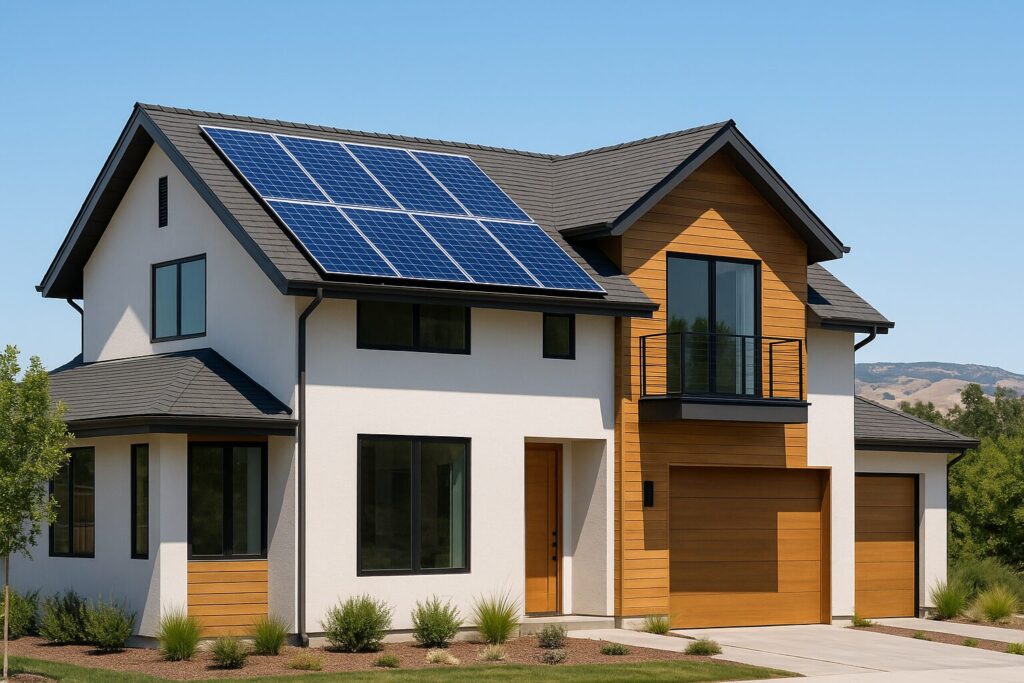
California is leading the solar energy movement, with more than 1.8 million homes powered by solar panels. But while solar panels generate electricity during the day, homeowners without a battery still rely on the grid when the sun goes down. That means you are selling energy to your utility at a low rate and buying it back at a higher one during peak hours.
This is where solar batteries come in. They let you store excess power and use it when you need it most during evenings, outages, or peak rate times. But with so many types available, which one is best for your home?
Let’s take a detailed look at the most common solar battery types for California homeowners and see which one delivers the best value, reliability, and performance in 2025.
Why Choosing the Right Battery Matters in California
California’s energy landscape makes battery storage more valuable than ever. Here’s why:
- NEM 3.0 changes: Net Energy Metering 3.0 dramatically reduced export credits for sending solar energy back to the grid. Batteries let you keep more of your power for personal use.
- Power outages and wildfire risks: Planned and unplanned blackouts have made backup storage essential.
- High time-of-use (TOU) rates: Electricity costs can double or triple in the evening. With a battery, you can use your stored solar energy during those expensive hours.
- Incentives and rebates: The California Self-Generation Incentive Program (SGIP) and the federal 30% solar tax credit make solar batteries more affordable than ever.
The right battery can lower your bills, keep your lights on during outages, and improve your return on investment.
The Main Types of Solar Batteries for Homes
Choosing the right battery starts with understanding the technology. Here are the main types available today.
Lead-Acid Batteries
Best for: Budget-conscious or off-grid homes in mild climates.
Lead-acid batteries have been used for decades in off-grid systems. They are reliable and affordable, but they have limitations compared to newer technologies.
Pros:
- Lower upfront cost
- Simple to install and replace
- Proven, familiar technology
Cons:
- Shorter lifespan (3–5 years)
- Require maintenance (for flooded versions)
- Heavier and less efficient
- Poor performance for daily cycling
Lead-Acid Battery Overview
| Feature | Lead-Acid (Flooded/AGM) |
|---|---|
| Cost per kWh (Installed) | $400–$600 |
| Lifespan | 3–5 years |
| Depth of Discharge | ~50% |
| Round-Trip Efficiency | 70–80% |
| Maintenance | Moderate to High |
| Ideal Use | Backup-only or off-grid |
| Overall Suitability for CA Homes | ⭐⭐⭐⭐⭐ |
Lead-acid batteries may be a fit for remote areas or backup-only use, but most homeowners will benefit more from lithium-based options.
Lithium-Ion Batteries (NMC and LFP)
Best for: Most California homes with grid-tied solar systems.
Lithium-ion batteries dominate the home storage market because they provide high efficiency, long life, and low maintenance. There are two main subtypes:
- NMC (Nickel Manganese Cobalt): High energy density, used in systems like the Tesla Powerwall.
- LFP (Lithium Iron Phosphate): Safer chemistry, longer lifespan, and more stable under heat.
Pros:
- 90–95% round-trip efficiency
- Long lifespan (10–15 years)
- Compact and low maintenance
- Ideal for daily cycling and backup use
Cons:
- Higher upfront cost
- Some performance degradation over time
- Recycling systems still developing
Lithium-Ion Battery Overview
| Feature | Lithium-Ion (NMC / LFP) |
|---|---|
| Cost per kWh (Installed) | $700–$1,000 |
| Lifespan | 10–15 years |
| Depth of Discharge | 90–100% |
| Round-Trip Efficiency | 90–95% |
| Maintenance | Minimal |
| Ideal Use | Grid-tied homes, TOU savings, backup |
| Overall Suitability for CA Homes | ⭐⭐⭐⭐⭐ |
For an in-depth look at the top-performing home batteries using these chemistries, visit our full guide on Best Home Solar Batteries.
Flow and Sodium-Ion Batteries
Best for: Large estates, advanced users, or future-proof homeowners.
Flow and sodium-ion batteries represent newer technologies that are gaining attention for their long life and environmental advantages.
Pros:
- Long lifespan (up to 20 years)
- Non-toxic and stable
- Can discharge completely without damage
Cons:
- High upfront cost
- Larger installation footprint
- Limited residential availability
Flow and Sodium-Ion Overview
| Feature | Flow / Sodium-Ion |
|---|---|
| Cost per kWh | $1,000+ |
| Lifespan | 15–20 years |
| Depth of Discharge | 100% |
| Round-Trip Efficiency | 70–85% |
| Ideal Use | Large-scale or experimental installs |
| Overall Suitability for CA Homes | ⭐⭐⭐⭐⭐ |
Flow batteries may become a strong competitor in the future as costs fall and energy density improves, but today lithium-ion remains the best choice for most homes.
Key Factors to Compare Before Buying
When evaluating solar batteries, focus on the specifications that affect both performance and lifetime value.
| Criteria | What It Means | Ideal Range for CA Homes |
|---|---|---|
| Usable Capacity (kWh) | Energy available for your home | 10–20 kWh typical |
| Depth of Discharge (DoD) | Percentage of usable capacity | 90–100% (for lithium) |
| Round-Trip Efficiency | Energy recovered after losses | 90%+ ideal |
| Cycle Life | Charge-discharge cycles before degradation | 4,000–6,000+ |
| Warranty | Coverage in years or cycles | 10–15 years typical |
| Temperature Range | Optimal performance range | -10°C to +45°C |
| Scalability | Ability to add more units | Preferred for growing homes |
Cost and ROI for California Homes
Battery prices have dropped significantly, but the total installed cost depends on brand, chemistry, and configuration. On average, California homeowners can expect:
| System Size | Average Installed Cost (Before Incentives) | After Federal + SGIP Incentives |
|---|---|---|
| 10 kWh | $10,000–$14,000 | $6,000–8,000 |
| 15 kWh | $14,000–18,000 | $9,000–12,000 |
| 20 kWh | $18,000–22,000 | $11,000–14,000 |
Batteries can help offset TOU rates, saving homeowners up to $1,000–2,000 per year depending on usage and system size.
To see up-to-date pricing and incentive breakdowns, visit How Much Does a Solar Battery Cost?.
Which Battery Type Is Best for Your California Home?
Every household has different goals, energy habits, and budgets. Here is a guide to help you match the right battery to your needs.
| Homeowner Type | Main Goal | Recommended Battery Type | Reason |
|---|---|---|---|
| Grid-Tied Suburban Home | Save on TOU rates and backup power | Lithium-Ion (LFP) | Efficient, compact, long-lasting |
| Off-Grid or Rural Home | Full energy independence | Lead-Acid or LFP Hybrid | Low upfront cost and reliable backup |
| High-Energy / EV Home | Smart energy management | Modular LFP System | Expandable and fast-charging |
| Eco-Driven / Future-Focused | Sustainability and innovation | Sodium-Ion / Flow (Emerging) | Non-toxic and long cycle life |
For most homes in California, lithium-ion—particularly LFP—offers the best combination of safety, durability, and efficiency.
Installation and Maintenance Tips
- Placement: Install batteries in a shaded, ventilated area such as a garage or side yard.
- Temperature control: Avoid direct sunlight or excessive heat.
- Safety: Always choose UL-certified systems that meet California building codes.
- Compatibility: Check whether your inverter supports DC-coupled or AC-coupled configurations.
- Monitoring: Use the manufacturer’s mobile app or energy management platform to track charge and discharge cycles.
NRG Clean Power’s certified installers ensure every system is designed for safety, performance, and long-term reliability.
Future Trends in Solar Battery Technology
The battery landscape is evolving quickly. Between 2025 and 2030, expect to see:
- Lithium Iron Phosphate (LFP) becoming even more dominant due to safety and cost advantages.
- Second-life EV batteries entering the home market.
- Virtual Power Plant (VPP) programs, where homeowners get paid to share stored energy with the grid.
- Improved recycling and circular battery production.
With these advancements, California homeowners will continue to see falling prices and greater performance.
Conclusion
The best solar battery for your home depends on your needs, energy usage, and budget. For most California households under NEM 3.0, lithium-ion (especially LFP) batteries deliver the strongest balance of reliability, safety, and long-term value. Lead-acid remains a low-cost backup solution, and new chemistries like sodium-ion and flow batteries show promise for the future.
If you’re considering a solar battery system, let NRG Clean Power’s experts help you find the right fit. Our team designs and installs fully customized solar + storage systems across California with proven results.
Get a free home energy assessment today and see how much you can save with a battery-powered solar system.
FAQ
1. How long does a solar battery last in California?
Lithium-ion batteries typically last 10–15 years, depending on use and temperature. LFP batteries last longer in hot climates like California.
2. Can I add a battery to my existing solar panels?
Yes. Most systems can be retrofitted, but compatibility with your inverter must be checked first.
3. What size battery do I need for my home?
Most homes need 10–20 kWh to cover evening use and essential backup loads.
4. Will a battery power my house during an outage?
Yes. When paired with a hybrid inverter, your battery can supply backup power automatically when the grid fails.
5. Is a battery worth it under NEM 3.0?
Absolutely. Batteries maximize self-consumption, reduce TOU costs, and offer security against blackouts.
NRG Clean Power is a trusted California-based solar and energy storage provider helping homeowners achieve energy independence with efficient, affordable systems tailored to their needs.