

Choosing solar panels in 2026 is less about chasing the biggest watt number and more about buying a module that:
- Fits your roof layout
- Matches your inverter/microinverter limits
- Produces well in your climate (especially heat)
- Holds output for decades with a strong warranty curve
This guide ranks the best solar panels of 2026 using datasheet-backed specs and homeowner-first decision criteria.
Top picks at a glance (2026)
Our top 5 solar panels (in order):
- REC 460 Alpha Pure-RX — best overall for hot-weather performance + ultra-low degradation + premium warranty structure
- Hyundai 440W (HiS-T440NF(BK)) — excellent efficiency + glass-glass bifacial build + 30-year performance warranty
- Qcells 440W (Q.TRON BLK M-G2+ 440) — strong reliability profile + very high mechanical load ratings + widely installer-friendly
- SEG 440W (SEG-440-BTD-BG) — standout 30-year product + 30-year performance warranty option
- Silfab 440W (SIL-440 QD) — high efficiency + strong 30-year performance coverage + excellent rear load rating
Quick recommendation
- Want the safest premium “set it and forget it” choice? REC Pure-RX
- Want 30-year performance warranty coverage? Hyundai / SEG / Silfab
- Live in heavy snow zones and want extreme load ratings? Qcells is tough to beat
- Want strong all-around performance in a standard residential size? Hyundai / Qcells / Silfab are especially easy fits
Side-by-side comparison table (2026)
Use this table to narrow to 2–3 finalists, then read the deep dives to make the final call.
| Rank | Panel model | Wattage | Efficiency | Temp coeff (Pmax) | Product warranty | Performance warranty | Guaranteed power (Yr 25) | Guaranteed power (Yr 30) | Dimensions (mm) | Weight | Max test load (front / rear) |
|---|---|---|---|---|---|---|---|---|---|---|---|
| #1 | REC Alpha Pure-RX 460 | 460W | 22.1% | -0.24%/°C | 20 yrs (25 w/ ProTrust) | 25 yrs | 92% | — | 1728×1205×30 | 22.7 kg | +7000 / -4000 Pa (4-point) |
| #2 | Hyundai HiS-T440NF(BK) | 440W | 22.53% | -0.290%/°C | 25 yrs | 30 yrs | 89.4% | 87.4% | 1722×1134×30 | 24.3 kg | 5400 / 4500 Pa |
| #3 | Qcells Q.TRON BLK M-G2+ 440 | 440W | ≥22.5% | -0.30%/°C | 25 yrs | 25 yrs | 90.58% | — | 1722×1134×30 | 21.2 kg | 8100 / 3600 Pa |
| #4 | SEG SEG-440-BTD-BG | 440W | ~22.5% | -0.30%/°C | 30 yrs | 30 yrs | 89.4% | 87.4% | 1722×1134×30 | 24.0 kg | 5400 / 2400 Pa |
| #5 | Silfab SIL-440 QD | 440W | 22.6% | -0.29%/°C | 25 yrs | 30 yrs | 90.8% | 89.3% | 1721×1133×30 | 21.0 kg | 5400 / 4000 Pa |
How to interpret the big specs
- Efficiency = how much power you can pack into limited roof space.
- Temperature coefficient = how much your power drops when panels run hot. Lower (less negative) is better.
- Warranty curve (Yr 25 / Yr 30) = your long-term production “floor,” and it matters most if you’ll keep the system 20–30 years.
How we ranked the best solar panels (2026 methodology)
There are lots of “good” panels. The best ones for homeowners separate themselves in five areas:
1) Real-world production (not just lab wattage)
What matters most:
- Temperature coefficient (Pmax) for heat losses
- Performance in non-ideal conditions (morning/evening, haze, partial shade)
- How the panel behaves with your inverter or microinverters
2) Long-term reliability and degradation
Key questions:
- What’s the guaranteed output at year 25?
- If there’s a 30-year warranty, what’s the year 30 guarantee?
- What’s the annual degradation rate?
3) Warranty structure that protects homeowners
You want clarity on:
- Product warranty (defects/materials/workmanship)
- Performance warranty (output over time)
- Any requirements for extended coverage (certified installer, registration, etc.)
4) Roof fit + engineering
Panels don’t exist in a vacuum:
- Dimensions change how many panels fit around vents, dormers, hips/valleys
- Weight matters for handling and engineering (especially glass-glass)
- Mechanical load ratings matter in snow/wind regions
5) Practicality
Even a great panel isn’t great if:
- It’s difficult to source in your region
- The model you want has limited distributor availability
- Your installer won’t support it
In-depth reviews: best solar panels of 2026
#1 REC 460 Alpha Pure-RX (REC460AA PURE-RX)
Best for: homeowners who want premium long-term performance, stronger hot-weather output, and extremely low degradation.
Why REC Pure-RX is #1
- Excellent hot-weather performance: -0.24%/°C is best-in-class among mainstream premium panels
- Industry-leading warranty curve: 0.25% annual degradation and 92% at year 25
- High roof value: strong power density (watts per roof area)
- Premium cell tech (HJT): generally associated with strong temperature behavior and efficiency stability
Key specs (REC 460 Pure-RX)
- Power: 460W
- Efficiency: 22.1%
- Temp coefficient (Pmax): -0.24%/°C
- Product warranty: 20 years standard, up to 25 years with ProTrust (typically requires certified installer + registration)
- Performance warranty: 25 years
- Degradation: 98% year 1, then 0.25%/year, 92% year 25
- Size: 1728 × 1205 × 30 mm
- Weight: 22.7 kg
- Loads: +7000 Pa front / -4000 Pa rear (certified, mounting dependent)
Watch-outs (important)
- Compatibility check is non-negotiable: REC Pure-RX can have higher voltage characteristics than typical 440W residential modules. Your installer must confirm cold-weather Voc and MLPE/inverter limits.
- Wider module: 1205 mm can reduce layout flexibility on complicated roofs.
- Extended warranty requirements: if you want the longer product warranty coverage, confirm what qualifies.
Who should choose REC Pure-RX
- Hot climates where rooftop temperatures run high
- Homeowners planning to keep the system long-term
- Roofs where every percent of performance matters
#2 Hyundai 440W (HiS-T440NF(BK))
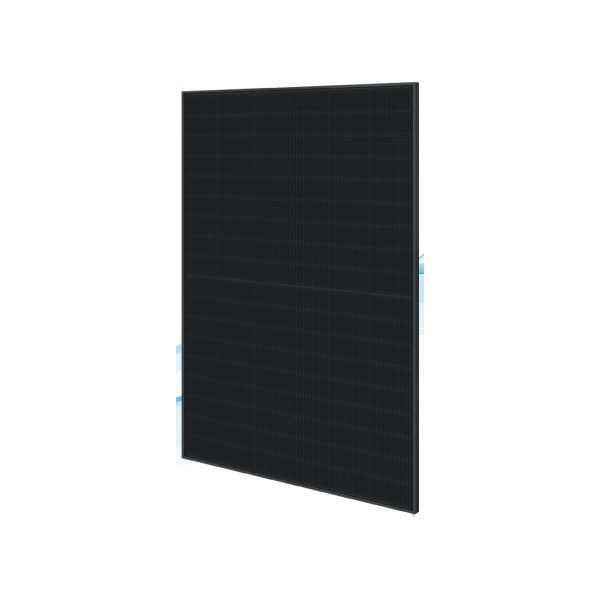
Best for: premium efficiency + long performance coverage, with glass-glass bifacial construction.
Why Hyundai ranks #2
- 30-year performance warranty (strong long-horizon confidence)
- Excellent efficiency: 22.53%
- Glass-glass + bifacial design can be a durability advantage and can add production in reflective/elevated setups
- Competitive temp coefficient: -0.290%/°C
Key specs (Hyundai HiS-T440NF(BK))
- Power: 440W
- Efficiency: 22.53%
- Temp coefficient (Pmax): -0.290%/°C
- Product warranty: 25 years
- Performance warranty: 30 years
- Degradation: 1% year 1, then 0.4%/year
- Guarantee: 89.4% year 25, 87.4% year 30
- Size: 1722 × 1134 × 30 mm
- Weight: 24.3 kg
- Loads: 5400 / 4500 Pa (front / rear)
Watch-outs
- Bifacial gains vary: On a typical flush asphalt-shingle roof, rear-side gain is usually limited. Bifacial shines more with clearance + reflectivity (ground mounts, elevated arrays, bright roofs).
- Heavier module: glass-glass often weighs more; ensure proper engineering (standard installer practice).
#3 Qcells 440W (Q.TRON BLK M-G2+ 440)
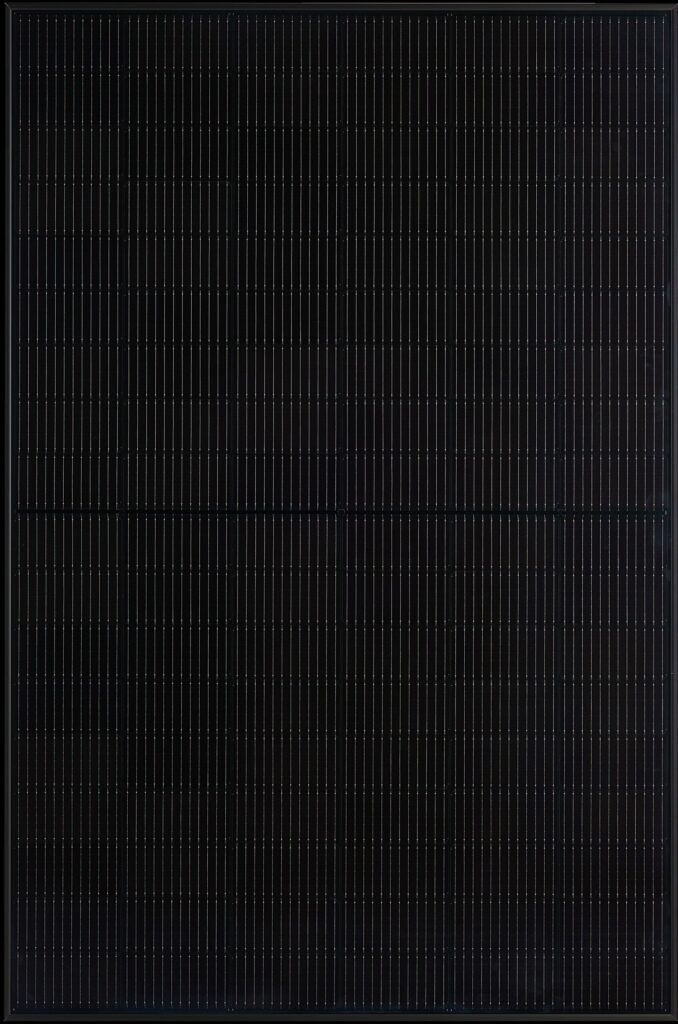
Best for: homeowners who want a premium, widely distributed module with exceptional mechanical ratings and a strong warranty baseline.
Why Qcells is a top homeowner pick
- Strong 25/25 warranty package (product + performance)
- Clear performance curve: 98.5% year 1, 0.33%/year degradation after, 90.58% at year 25
- Extreme load testing: 8100 Pa / 3600 Pa is among the best in class (great for snow/wind zones)
- Practical residential sizing that fits common layouts
Key specs (Q.TRON BLK M-G2+ 440)
- Power: 440W
- Efficiency: ≥22.5%
- Temp coefficient (Pmax): -0.30%/°C
- Product warranty: 25 years
- Performance warranty: 25 years
- Guarantee: 90.58% year 25
- Size: 1722 × 1134 × 30 mm
- Weight: 21.2 kg
- Loads: 8100 / 3600 Pa
Watch-outs
- If you want a 30-year performance warranty, you’ll compare Qcells directly against Hyundai/SEG/Silfab.
- Temperature coefficient is strong, but not as heat-optimized as REC Pure-RX.
#4 SEG 440W (SEG-440-BTD-BG)
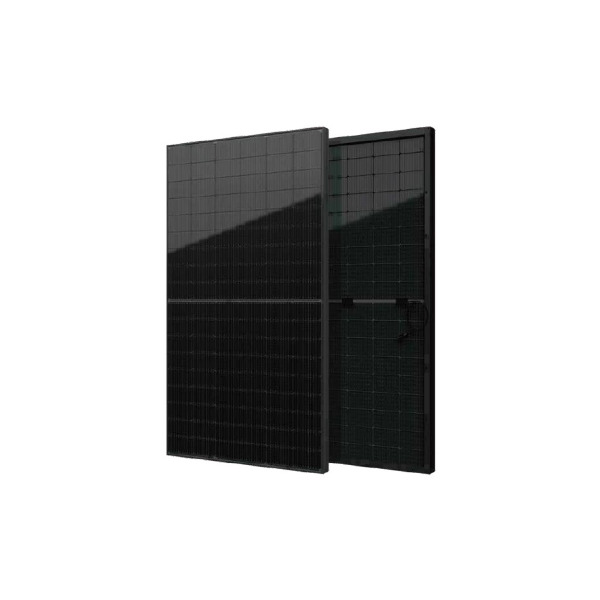
Best for: homeowners who want a standout warranty horizon: 30-year product + 30-year performance.
Why SEG makes the 2026 list
- 30-year product warranty + 30-year performance warranty is rare and valuable
- Clear long-term curve: 89.4% at year 25, 87.4% at year 30
- Bifacial glass-glass design (durability and potential rear-side gains in the right installs)
Key specs (SEG-440-BTD-BG)
- Power: 440W
- Temp coefficient (Pmax): -0.30%/°C
- Product warranty: 30 years
- Performance warranty: 30 years
- Degradation: 99% year 1, then 0.4%/year
- Guarantee: 89.4% year 25, 87.4% year 30
- Size: 1722 × 1134 × 30 mm
- Weight: 24.0 kg
- Loads: 5400 / 2400 Pa
Watch-outs
- Rear-side load rating (2400 Pa) is lower than some competitors. Your installer should confirm it meets your local engineering needs and mounting approach.
- Bifacial gains depend heavily on the install.
#5 Silfab 440W (SIL-440 QD)
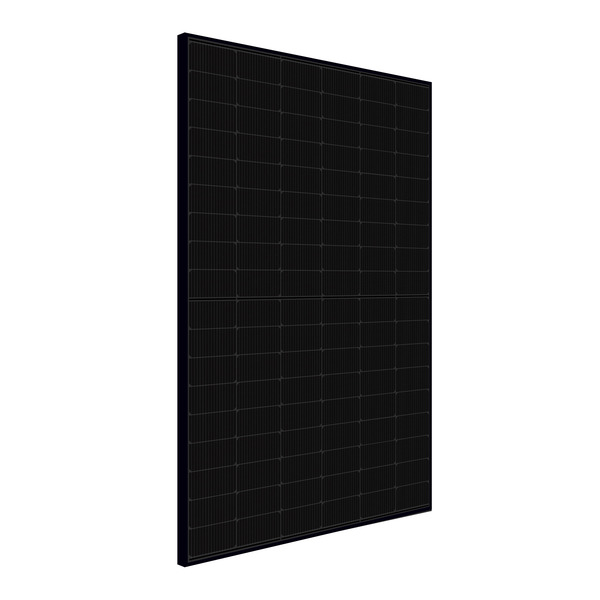
Best for: homeowners who want very high efficiency, strong 30-year performance coverage, and excellent rear-side load rating.
Why Silfab is a strong premium choice
- Top-tier efficiency: 22.6%
- 30-year performance warranty with clear milestones
- Strong rear load rating compared to several bifacial options
- Competitive temp coefficient: -0.29%/°C
Key specs (SIL-440 QD)
- Power: 440W
- Efficiency: 22.6%
- Temp coefficient (Pmax): -0.29%/°C
- Product warranty: 25 years
- Performance warranty: 30 years
- Guarantee: 98% year 1, 90.8% year 25, 89.3% year 30
- Size: 1721 × 1133 × 30 mm
- Weight: 21.0 kg
- Loads: 5400 / 4000 Pa
Watch-outs
- Availability can vary by region—ask your installer what’s realistically sourced and supported.
How to choose the right solar panel for your home (2026 decision framework)
Step 1: Identify your #1 constraint
- Limited roof space: prioritize efficiency (Hyundai, Silfab are excellent; REC is strong too)
- Hot climate: prioritize temperature coefficient (REC leads here)
- Snow/wind region: prioritize mechanical load ratings (Qcells stands out)
- Long-horizon ownership (25–30 years): prioritize warranty curve + term (Hyundai/SEG/Silfab offer 30-year performance coverage)
Step 2: Match the panel to your inverter strategy
- Microinverters / optimizers (MLPE): great for shade + complex roofs, but your installer must confirm:
- cold-weather Voc
- operating current limits
- model-specific compatibility
- String inverter: often cost-effective for simple, unshaded roof planes and can be easier for certain electrical profiles
Step 3: Compare warranties like an expert
Don’t just compare “years.” Compare:
- Product warranty length
- Performance warranty length
- Year 25 / Year 30 guaranteed output
- Any special requirements (registration, certified installer programs)
Step 4: Decide based on “real value” outcomes
Ask:
- Does a higher-efficiency panel let me use fewer panels?
- Does a better temperature coefficient add meaningful production where I live?
- Does the warranty structure reduce long-term risk (especially labor/removal if relevant)?
How to read a solar panel datasheet (without getting lost)
1) STC vs real-world production
- STC is a lab rating. It’s helpful for comparing, not predicting your rooftop output.
- Real-world output is shaped by heat, shade, roof angle, and inverter behavior.
2) Temperature coefficient (Pmax)
This spec tells you how much power you lose as the panel heats up.
- Example: if cells run ~20°C above STC on a hot day
- Difference between -0.24%/°C and -0.30%/°C ≈ 0.06% × 20 = ~1.2% more output for the lower-coefficient panel (all else equal)
3) Degradation and warranty curve
Small differences compound.
- 0.25%/year vs 0.4%/year can mean noticeably different output decades later
- Look specifically at year 25 and year 30 guarantees (if offered)
4) Mechanical loads
If you live in severe weather areas, this matters.
- Higher load ratings can mean better resilience under snow/wind stress when paired with proper racking.
5) Voltage/current (compatibility)
This is where “great panels” can become “bad choices” if the design is wrong.
- Voc increases in cold weather
- Microinverters and optimizers have strict input limits
- Your installer should show you compatibility checks, not just say “it’s fine”
Questions to ask your installer in 2026 (these prevent expensive mistakes)
- Which exact model number are you quoting (not just the brand)?
- Can you share the datasheet + warranty docs for that exact model?
- How does the panel’s Voc/current match the inverter or microinverter input limits (including cold-weather Voc)?
- What’s the estimated annual production (kWh), and what assumptions did you use?
- What workmanship warranty do you provide, and what does it cover?
- If a panel fails, who pays for labor to remove/reinstall it?
- What monitoring will I get (system-level vs panel-level)?
- How do you handle roof penetrations, flashing, and water sealing?
FAQ: Best solar panels of 2026
What’s the best solar panel in 2026?
For most homeowners, REC Alpha Pure-RX 460 is the strongest all-around premium pick because of its excellent temperature coefficient and long-term degradation/warranty curve. But the “best” can change based on roof space, climate, and warranty horizon.
Is a 460W panel always better than a 440W panel?
Not necessarily. Wattage is partly a function of panel size. A larger panel can have more watts but may be harder to fit on complex roofs. Efficiency, temperature coefficient, degradation, and compatibility often matter more.
What’s a “good” efficiency in 2026?
For premium residential panels, ~21.5% to 23%+ is common at the top end. If roof space is limited, pay extra attention to efficiency.
Should I buy bifacial panels for a standard roof?
Bifacial can help more on ground mounts, elevated arrays, or reflective roofs. On typical flush-mounted asphalt shingle roofs, the rear gain is often limited.
Do premium panels always pay back faster?
Not always. Premium panels can reduce risk and improve production, but payback depends on system price, incentives, utility rates, and financing. The best value is often the panel that hits your production target with the fewest compromises.
Disclaimer + sources
Disclaimer: This guide is educational. Panel specs and warranty terms can change by revision and region. We are not the manufacturer. Always confirm the final equipment selection using the official datasheet and warranty documents for the exact model number you are purchasing, and confirm inverter/MLPE compatibility with your installer.
Datasheet sources used for the specs in this guide:
- REC Alpha Pure-RX (REC460AA PURE-RX)
- Hyundai NF(BK) series (HiS-T440NF(BK))
- Hanwha Qcells Q.TRON BLK M-G2+ series (440W bin)
- SEG (SEG-440-BTD-BG)
- Silfab (SIL-440 QD)